Showing posts sorted by relevance for query Black Sea. Sort by date Show all posts

Monday, 24 May 2021

The Black Sea Obs Project

So that's it for now from Bulgaria Spring 2021. A superb trip and managed to progress the Black Sea Obs Project (Project outline at end of this post). Dimiter organised the boundary survey before I arrived and I managed to complete a basic habitat survey and commence both moth recording and nocturnal migration recording (We also received good news today in that we will be collaborating with Magnus Robb and the SOUND APPROACH on the noc-mig who have sponsored our own SM4 continuous recorder- thank you Mark Constantine! ). I also completed some preliminary habitat management plans in addition to populating various Ebird spots with data that we will be working on. 

Here's a drone video of our plot showing the context, we've got approx 2000m2 of this ( shown in facebook video below). 

Very much looking forward to returning in Autumn 2021! 

Anybody interested in collaborating/ volunteering on this project please contact me littleoakgroup@btinternet.com and if you would like to donate to or sponsor this project please do so HERE (Many thanks in advance). 


Dawn at the project site with singing Nightingale, Golden Oriole, Turtle Dove, Collared Dove, Corn Bunting, Skylark and Pheasant. 

PROJECT OUTLINE 


Project: Black Sea Observatory (Bulgaria) 


Aims and Objectives: To set up a recording station to monitor bird migration and local biodiversity in the Dobrudja region of Bulgaria on the Black Sea Coast. To develop a small lodge/cabin and enhance the garden/grounds for biodiversity. This project is a satellite project to the Balkan Ecology Project https://balkanecologyproject.blogspot.com/ and also part of LITTLE OAK GROUP


Background: I've been working with my brother on the Balkan Ecology Project (in the Valley of the Roses) for the last ten years. The project has purchased several hectares of land there to protect it and also to develop wildlife-friendly farming. My brother and family runs regular residential courses through the year and also a plant nursery and permaculture small holdings. We've set up bird and ecological monitoring systems there and have run bird and wildlife tours/events etc. The Black Sea project is a satellite project of that and we will be developing the project site in partnership with both Balkep (who will do the landscaping and any permaculture elements to the project) and Neophron Bird Tours https://www.neophron.com/. Neophron plan to use the site for photography tours and we also plan to extend the site by purchasing more land next to the site that we have currently purchased. Neophron are dealing with the logistics, legal matters, translation, planning etc. Currently we own 2000m2 at the Black Sea coast site but hope to expand the site.


Additional Details: We plan to visit the site in both the spring and autumn migrations and hope to attract volunteers to cover much of the migration period. The project site is located conveniently (10-15 min drive) to monitor bird migration at Cape Kaliakra (the Spurn of the Black Sea) , the Shabla Lake Complex, Shabla headland, Yaylata Archeological Reserve and also Kamen Bryag (the project village location) and surrounding villages. The area is a Natura2000 location and is located within the Bulgarian steppe habitat (a rare remnant habitat).


We plan to study the following aspects:


1) Bird migration- daily counts recorded on Ebird during Spring and Autumn migrations 

2) Moths trapping for local and migrant species (also recording local butterflies)

3) Recording of local herpetology 

4) Nocturnal bird migration sound recording

5) Casual recording of other biodiversity in region (botanically the area is very important). We suspect there might be wildcats in the region too so will camera trap for mammals.


We also plan to develop the following:


1) A residential lodge/ research cabin

2) An area of improved habitat including meadows, water feature, trees, hedge and shrubs

3) To host tours, lead local tours and residential visits


Pipedream potential

We are building on existing success in the region with Balkep and Neophron and also proven working birding projects elsewhere such as Corvo/ Azores Birding and Beddington Farmlands Nature Reserve. More on our projects here LITTLE OAK GROUP and HERE .  We already own the land with no mortgage and have an allocated budget  to create the cabin and habitat improvements. We hope to crowd fund to buy additional land. We've been successfully working in Bulgaria for ten years already so in it for the long haul , got the right people for it, the seed money and the expertise so it's about as good as it gets.

Friday, 17 December 2021

Bulgaria Project 2021 Review

All was going well with this until the British Government decided to downgrade the Bulgarian covid classification from yellow to green. Instead of reducing travel restrictions, Bulgaria reacted by putting the UK on their red list to stop the British tourists coming in with their double-vaxed carefree demeanours spreading covid to Bulgarians who refuse to trust the government's vaccination programme (I think Bulgaria remains the lowest vaccination uptaker in the EU). Anyway we managed to get out there in the Spring but the autumn trip was cancelled.  Also our partner Neophron managed to acquire some more land adjacent to the first area we have bought. 

The Spring trip was epic! Here's a few shots. Blog posts HERE. Fingers crossed we will be back out there next Spring. 

Great Snipe- finding a world tick was the highlight
Common Rosefinch- a Bulgarian scarcity 
Arctic Skuas in the Black Sea chasing Sandwich Tern 
The migration was spectacular- a few Black Terns on the move 
Greater Flamingos- currently expanding North up the Black Sea, these birds were at Shabla Tuzla 
Good numbers of Yelkouan Shearwaters in the Black Sea during Spring 
These enigmatic Wheatears were extremely interesting MORE HERE
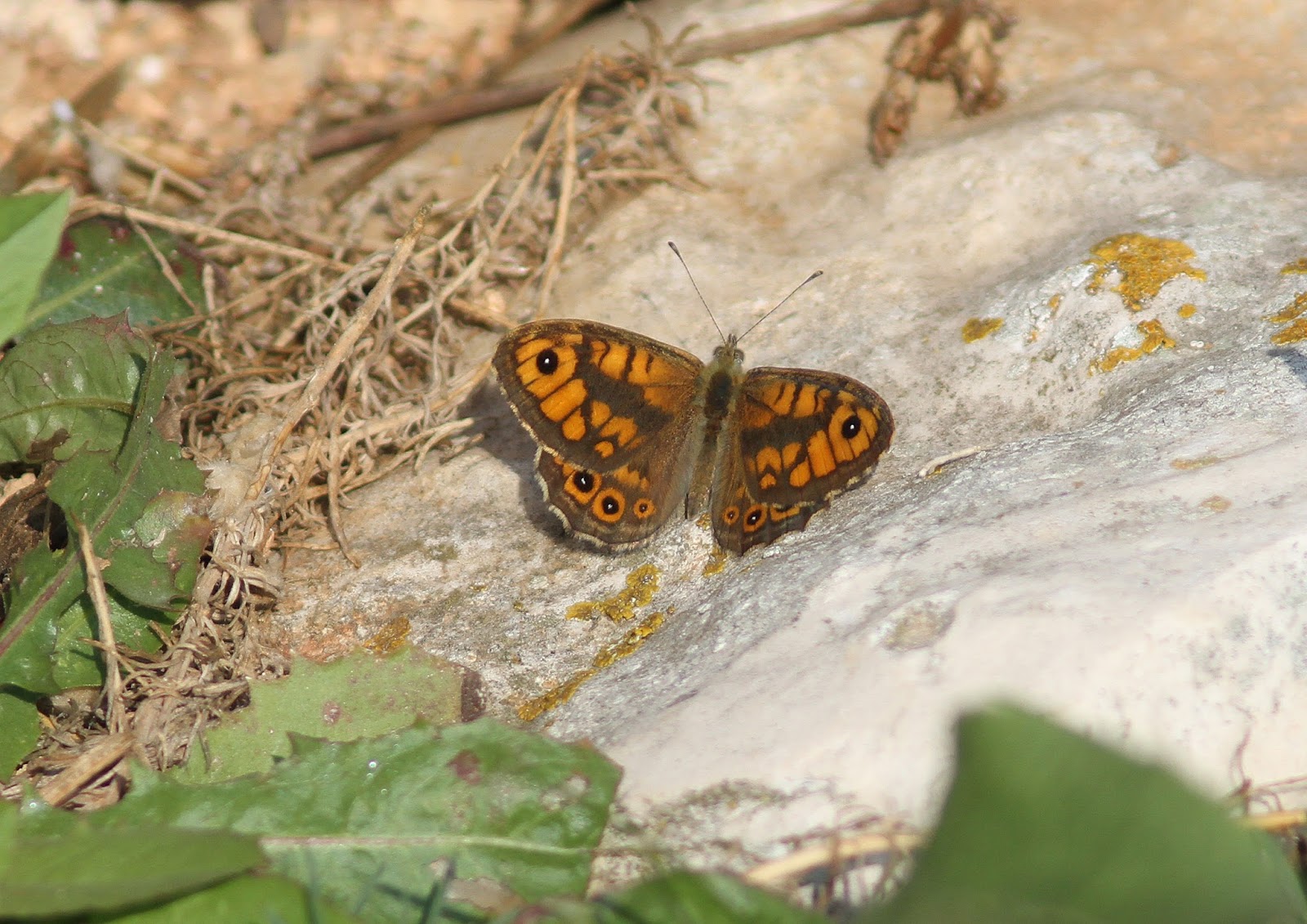
Nettle-tree Butterfly 
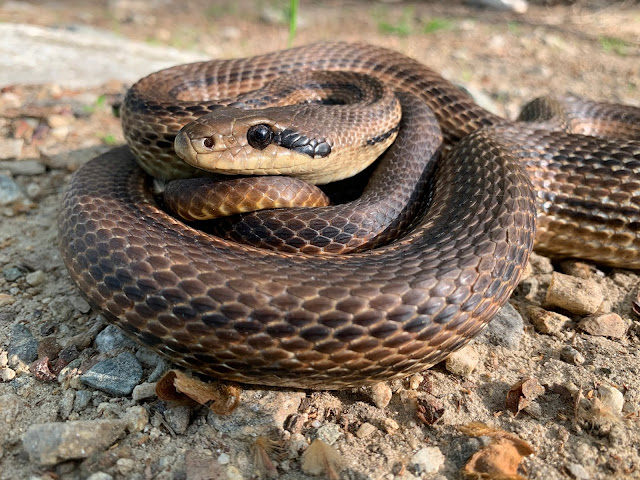
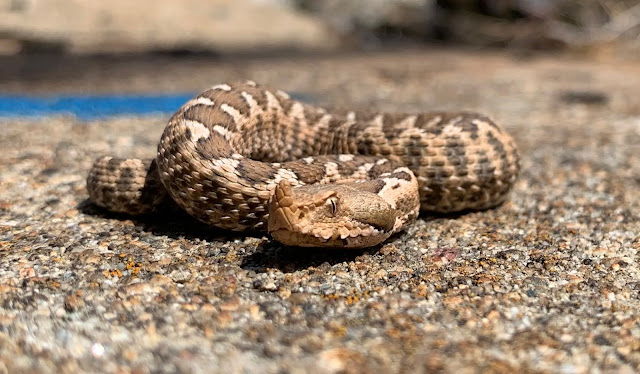
The herping trip was absolutely mega- Four-lined Snake (above) and Horn-nosed Viper (below). More HERE  . We did some Tik Tok videos, one of them got 4.5 million views HERE.  

A project by 

Monday, 8 June 2026

20 years visiting Bulgaria


It's been twenty years since I first visited Bulgaria in 2006. My brother Paul, his partner Sophie and two kids, Dylan and Archie had decided to leave the UK behind and start a new life in Shipka at the foothills of the Balkan Mountains. After a few years of finding their feet they established the Balkan Ecology Project HERE and I did my best to visit as often as I could to help out on the project and also explore Bulgaria from there.

In 2016 Paul and I purchased about 14 hectates of land in the Shipka area for the project and in 2020 I also purchased a plot on the Black Sea coast at Kamen Bryag and since then have also been visiting that area regularly to focus on migrant birds and lepidoptera of this part of the Via Pontica flyway. 

So basically Bulgaria has become a second home/holiday home over the last twenty years. In total I have visited 26 times! - in July 2006 to Shipka with Kate, January 2009 to Shipka before embarking on a six week road trip to the Middle East with Paul, December 2010 to Shipka and then with Dimiter for wild geese, May 2011 with Dimiter, Darryl and Greg for a Spring tour with Neophron, June 2013 to Shipka, February 2015 with Wise Birding for Geese in Romania, July 2015 to Shipka with Maria and the girls, September 2015 for autumn birding with Dylan, April 2016 to Shipka, July 2016 to Shipka (met Anton for first time),  May 2018 with Holly and Jacob to Shipka and herping with Dylan and Anton to the Eastern Rhodopes, November 2018 with my dad to look into Black Sea purchase, August and September 2019 with Holly and Jacob on a road trip through Europe to Bulgaria, February 2020 to complete the Kamen Bryag purchase, April/May 2021 to Kamen Bryag and then herping with Dylan and Anton to Kresna, May 2022 to Kamen Bryag and herping trip to Burgas region with Dylan and Anton, July 2022 to Kamen Bryag to work on the plot with Dylan and Anton, November 2022 to Kamen Bryag for more work on the land, May 2023 to Kamen Bryag and then herping at Kresna and Baba Vangas, July 2023 to Kamen Bryag for moth recording, September 2023 with Arjun for his Cambridge University dissertation and the boys and Roger also visited as we started the pond, October 2024 with Kojak to Kamen Bryag, June 2025 with Kojak to Kamen Bryag to complete the pond, September 2025 with Kojak to Kamen Bryag, October 2025 to Kamen Bryag on my own for some epic migration and now May/June 2026 with Holly and the boys and later visiting Shipka and natural history exploring. 

Far too many highlights to even begin listing them but found several megas for Bulgaria on both the birds and moth fronts. In total I've had 306 bird species HERE (23 in Ebird Top 100) and 582 moths and butterflies HERE and most of the herps in Bulgaria plus loads more with over 700 species on I-Nat HERE which is incomplete as doesn't include botany, herps or mammals. My butterfly list without the moths is on 92 HERE. 

Still loads more to do out there. The next plans include to target the remaining Butterflies, I still need Cat Snake, to keep up the migration recording on the Black Sea Coast and hopefully find more megas for the country and to expand the land purchasing to create a new nature reserve in Kamen Bryag. 

Dylan in 2006
Me mincing in the woods
Dylan and Anton
Paul, Dylan and Archie
Dimiter, Marina and Dylan in Burgas September 2015

Friday, 25 September 2015

Euro Trip Day 7: Shabla Region

 We started the day at Cape Kaliakra.


 Most impressive was a movement of Eurasian Sparrowhawks- we had 30+ in two hours heading south
 Also moving south was this Juvenile Honey Buzzard, 1 Hobby, 1 juvenile Pallid Harrier and a couple of Marsh Harrier
 This Turtle Dove (left) was amongst the local Collared Doves
 Juvenile Red-backed Shrike. There were several of these at all the sites we visited today. Also at the Cape were 10+ Red-breasted Flycatcher, 5+ Willow Warbler, 1 Lesser Whitethroat, 300+ Swallow moving south first thing, a couple of Redstart and 1 Spotted Flycatcher
 Wall Lizard

 Wall
 Hummingbird Hawkmoth
 Dimiter met us at about 10 and then we moved north to Ezero Tuzla and then Lake Durankulak.
 Several Little Gulls were on the lakes and sea. We also had Caspian, Sandwich and Common Tern and Yellow-legged, Caspian (and 'Black Sea' Gulls), Mediterranean and Black-headed Gull. Waders present were 20+ Ruff, 4 Little Stint, 8 Dunlin, 8 Sanderling, 2 Little Ringed Plover, 3 Grey Plover and 1 Snipe. Shags, Cormorants, Pygmy Cormorant and Great Crested Grebes were on the sea. Also Bittern, Purple Heron, Great and Little Egrets and about 40 Grey Herons.
 There were migrants all over the place. 100s of White Wagtails, Yellow Wagtails, more RB Flickers, Redstart, Spotted Fly, Blackcap, Willow Warblers, Swallow, Sand Martin. We also had a fly over Osprey and a few Marsh Harriers. Also 100+ Spanish Sparrows.
Our final venue for the day was  the fields around Tyulenovo which were crawling with birds.
 5+ Whinchat, 4 Wheatear, 2 Stonechat, 200+ White Wagtail, 50+ Yellow Wagtail, 25+ Red-backed Shrike, 300+ Corn Bunting, 200+ Starling, 15+ Calandra Lark, 6 Jay and Syrian Woodpecker in the village
Just as light was failing as our full 12 hours in the field came to end, two juvenile Montagu's Harriers came down into the fields near our hotel
View from our Hotel (The Dolphin) in Tyulenovo, over the Black Sea

Monday, 14 October 2024

Bulgaria, Autumn 2024, Day Two

Today was mainly a work day getting the wildlife pond at the plot progressed further. The four boys were down for a couple of days so we concentrated on work before they headed home this evening. 

Before work started Kojak and I were up and at Cape Kaliakra by dawn. We only had a couple of hours but still managed 58 species HERE. Highlights included the mind blowing vis-mig with 11250 Chaffinch, 1500 White Wagtails, 300 Spanish Sparrows and smaller numbers of Alpine Swifts, Barn Swallows, Bramblings, Siskins,  Skylarks, Crested Larks, Hooded Crows, Reed Buntings, Woodpigeons, Mistle Thrush, Song Thrush, Red-throated Pipits, Tree Pipits and Corn Buntings. 

Meanwhile on the deck there were at least 75 Wren including birds being picked off by Yellow-legged Gulls as they flew in off the Black Sea. Seemed tragic that these tiny birds had just crossed the whole of the Black Sea only to be killed within meters of the cliffline. There were also about 40 Robin, 15 Black Redstarts, a single Red-breasted Flycatcher, 2 Red-backed Shrike and Honey Buzzard and Marsh Harrier went over. There were also 6 White Pelican on the sea. There were also a couple of Harbour Porpoise off shore. 

We also did a couple of hours in the evening around Kamen Bryag HERE. There was more in the way of insect migration than bird migrations with thousands of Silver Y and smaller numbers of Rush Veneer and Rusty-dot Pearl and two Crimson Speckled. Also tens of Red Admiral and Painted Lady. 

Four adult and two juvenile White Pelicans
Wren- a clear large fall of these today with at least 75 between the car park and the point. So plenty made it past the Yellow-legged Gulls
Juvenile dark phase Honey Buzzard
Another stunning male Black Redstart
Common Redstart
Juvenile Red-backed Shrike. It's interesting to see that some species like Red-backed Shrike, Red-breasted Flycatcher and Common Redstart are still moving through. We've recorded these on earlier autumn trips in August and September but in larger numbers so at the tail end now. However there are no Bee-eaters, Rollers, Golden Oriole, Spotted Flycatcher or Ficedula flycatcher and most surprisingly no Wheatears, no Northerns or Pieds and only one Whinchat and one Hoopoe. No Marsh Terns either or Little Gulls. Clearly there is a different suite of birds moving now dominated by finches. It's all pretty fascinating. 
Crimson Speckled- a couple of these on the steppe. Seems like I didn't pay my electricity bill as I've been cut off at the plot so not been able to have the moth trap on there. I've got it on at the guesthouse tonight so fingers crossed as the whole area here is dripping in migrant moths (mainly Silver-Ys). We also had a Convolvolus Hawk moth on the plot. 
The pond development today . Previous on this HERE
Still a work in progress- we now need to edge it and trim the membrane to shape. Within minutes there were dragonflies swarming round and in the evening the first bird- a Chiffchaff came in for a drink. There isn't much fresh surface water in this area- its limestone cliffs and karst round here so this pond hopefully will be quite a magnet for migrants. 

Sunday, 10 July 2022

Bulgaria, July, 2022, Day Two: Rosy Starlings, Cape Kaliakra

Today 5th July I did the moth trap at the project site at dawn and then headed over to Cape Kaliakra to meet Dimiter. Obviously not a lot migrating this time of year at this famous migration hotspot, just a few Mediterranean Gulls moving around. In contrast to just a few weeks ago when I was last here there were no Yelkouan Shearwaters, the birds have moved out of the Black Sea now (where many spend the non-breeding season) and have gone to their summer breeding grounds in the Mediterranean via the Bosporus and the Sea of Marmara. Also no sign of any Black-throated Divers or Black-necked Grebes which were congregating here up until early May at least. 

As we were leaving the Cape we noticed a few Rosy Starling feeding in the Steppe. I was hoping to see this species on this visit as I generally visit earlier in the Spring before they arrive in the region. Typically Rosy Starlings arrive in Bulgaria from around 10th May and some years they arrive in numbers and set up nomadic breeding colonies in places like quarries and cliff faces. In good years there can be several colonies, sometimes large ones involving hundreds (even thousands) of pairs but in other years there may be no colonies at all. The last time a colony was present at Cape Kaliakra was 2018 and before then there have been long gaps so the situation is a sporadic and unpredictable one, typical of this nomadic species. The nomadism is dependent on the availability of grasshoppers/locust to feed their young, with groups moving around in early May to search for suitable breeding areas and colonies appearing by early June if suitable areas are found. It's this nomadism that leads to birds pushing further west when environmental conditions are such, where they seem to be appearing with increasing frequency in Western Europe. The first one for the Azores was recorded in June 2020 representing the furthest west this species has reached.  

Anyway with this in mind, we decided (thanks to Dimiter's expertise on this matter) to follow the direction the birds were moving in which eventually took us to the coastline where eventually we did indeed discover a breeding colony on the cliffs. The colony had in fact already been found by local ornithologists (they estimate about 500 pairs)  who requested we do not circulate the news widely until the young birds had fledged to prevent any un-necessary disturbance so we agreed to wait a week or so (I'm writing this a week later) and indeed the young have now fledged (see a later post). Here's a few photos from before the young were out. We also had Roller, Hobby and Long-legged Buzzards quartering the colony looking like they might be hunting the Starlings. 

Adult birds, the males are brighter pink with longer crests and the female brownish pink. First-summer birds are difficult to age as both adults and juveniles undergo a full moult over the autumn/winter but 'blotchy' males and browner females can indicate younger birds.  Although not visible on these photos another good feature to sex birds is the lack of pale markings on the otherwise dark undertail coverts of adult males (browner with pale tips on females). (Ref: Shirihai and Svensson HWPB) 
Adult birds with a juvenile Common Starling 
Male Rosy Starlings (above and below) 

Female Rosy Starling with prey. This is a particularly brown female so possibly a second-calendar year bird. 

Feeding flocks in the grassland 

We spent the rest of the day touring the usual restaurants (there is actually a new restaurant in Kamen Bryag now called Tango which will be a lot more convenient then having to travel to Balgarevo) and then visited the project site to discuss conservation works. 

In the evening I travelled to Varna to pick up Dylan and Anton and then it was back to the 'Mopko' for some fine Bulgarian food (including some local endemic Black Sea fish). In typical Anton style as soon as we arrived at the guesthouse he found a Green Toad in a ditch. I had a Dice Snake on the road at Cape Kaliakra and there were also Green Lizards at the project site. There was a small pond near the Starling colony where we also had 'Marsh Frog' calling. Will do a separate post on the moths and butterflies as I haven't even identified most of them yet. Needless to say plenty of lifers.