Wednesday, 7 October 2020

Oakley airfield

Spent the day locally today as wanted to try out Oakley airfield in the autumn after discovering it was pretty good for migrants in the Spring. It was a pretty good morning ebird list here.

Highlights included a flock of 142 Golden Plover, 3 Wheatear, Corn Buntings, over 100 Skylarks and Peregrine. 

Very quiet in the Old Vic moth trap last night- just a handful of Lunar Underwings.

The birding and mothing forecast for the next week looks pretty dire with a westerly airflow (however it is bringing in a few American vagrants to the west coast)  until the weekend when a north westerly/northerly becomes established (even worse!). An easterly airflow does not feature on the forecast charts until next Wednesday and Thursday and then we are supposed to be getting a southerly and presumably warm air . So the change towards the end of next week looks very interesting. 

Wheatear (above) and Golden Plovers (below). 


Tuesday, 6 October 2020

Kent Mini-break

Well that didn't quite go to plan. I was waiting for something good to turn up on the east coast that I could twitch and then do some rarity hunting in that area. However by Sunday night there was nothing within striking distance so I thought I would do a couple of days in North Kent so I left at 6am and started off at Grain. Within minutes news was confirmed of the Steppe Grey Shrike in Suffolk- that would have been perfect- it's a lifer. Traffic was murder getting to Grain so I thought I'd stick to the plan and go for the shrike the day after (today). So I did Grain for most of the day- migrants included 1 Wheatear, 10 Siskin, 3 Lesser Redpoll, my first Brent Geese of the autumn (100+), 10 Blackcap,  50+ House Martin, 10 Swallow, 10 Chiffchaff, 4 Goldcrest, 2 Stonechat, 40 Meadow Pipit, 11 Skylark, 1 Rock Pipit, a notable presence of Robins, a Gannet in the Thames and a good selection of other wintering wetland birds in the Thames. Also had Clouded Yellow and Wall Brown butterflies. 

I spent the evening on Sheppey in the campervan (at Warden Springs) and put the moth trap out despite the moderate south west winds and rain. Surprisingly there were a few migrants. This morning I did the bushes at Warden Point, which were very quiet and then decided to set off to twitch the Shrike. 

No sooner I had I started my journey, did my phone decide to completely pack up (no internet access) so I had no idea how to get to the bird and simultaneously I was dealing with phone calls about chaos at work so I had to abort and go back home (so much for my month off) to sort stuff out. I ended up back at the farmlands for an hours birding in the evening! I can't escape!! Will try again tomorrow.  

First-winter Wheatear
Migrant Robins were quite conspicuous 
A walk for my dinner (cockney cockles) took me along Leysdown Beach which hosted roosting Sandwich Terns, Mediterranean Gulls, Ringed Plover, Dunlins and migrant Mips, Pied Wags and a Wheatear. 
First Brents of the autumn 
A Delicate- my first in the UK if I remember right. Had a few other migrants including Clancy's Rustic (below), Rusty-dot Pearl, Silver-Y, and Turnip. Mainly (apart from the Craneflies!) Lunar Underwings, Lesser and Large Yellow Underwings,  Beaded Chestnut, Small Rannunculs and a few other typical autumn species. 

Gold Spot are always a treat 
Brick was a new for year for me 
I wasn't sure about this- thought maybe a worn Feathered Rannunculus ? 
Another mystery moth- not sure at all, a drab? or a melanic Square-spot rustic? 
Moth trap on the cliff last night 
Warden Point (the cliff in distance) , Sheppey from Leysdown Beach 

Highlight of the evening visit to the farmlands was 150+ House Martin hawking over the South Lake. They've been around for a couple of days so presumably being held up in the weather conditions. 

Monday, 5 October 2020

Save the lapwings petition - please sign

Please sign the petition to save the lapwings at beddington farmlands . We’ve already lost our Tree Sparrows, Yellow Wagtails and Redshanks at the hands of Viridor and can’t afford to lose anymore 


Sign here 

Saturday, 3 October 2020

Birding Plan for week

I'm with the family tomorrow ready for kick off on Monday. If I could I would get myself up in the Northern Isles for the next few days. The mega laden easterlies of the last few days continue until mid-week while the centre of the low moves north bringing westerlies to every where below the NE and Scotland (image one) from Monday onwards. After mid-week a rather boring looking westerly airflow (lacking deep depressions with a jet stream rather far south) dominates the whole of the UK and by next weekend a Northerly airflow starts to dominate (image two).

It's a difficult situation as really need to get up on the Northern Isles but seems like a lot of effort just for next couple of days and the horse is already bolting. Next best thing is to get as north and east as possible on the mainland so I'll see what the bird news is tomorrow night and then move into position for Monday morning somewhere on the east coast. It could all be a bit late by then but hopefully still some birds hanging around. 

I'll probably come back to the family late week as looks like things are going to calm down and then will keep an eye on the northerly wind situation next weekend and might move back to the east coast for some sea watching. Will see if anything turns up worth twitching too as that could narrow down the choice of where to go. 

This will be my first autumn in over 20 years that I've rarity hunted in the UK. It gives me an opportunity to look for eastern stuff which I'm missing in my finds collection HERE  I'll miss the Azores this year (I'll only go and risk covid disruptions if the weather looks really good). Instead of nearly 100 birders on Corvo it seems like will only be 10 or so this year.  There's been a few bits already. Corvo blog. My plan was to  be on the Black Sea and back on the Azores this autumn but hopefully can resume that plan next year. In the meantime it feels like revisiting my youth- it's quite exciting! 


Beddington Farmlands, change of guard

Despite ideal conditions this morning and seabirds being recorded all around (Kittiwake and Gannet in North London, Sandwich Tern at Bough Beech and Little Gulls at Rainham) there was, unfortunately no repeat of yesterday's action.

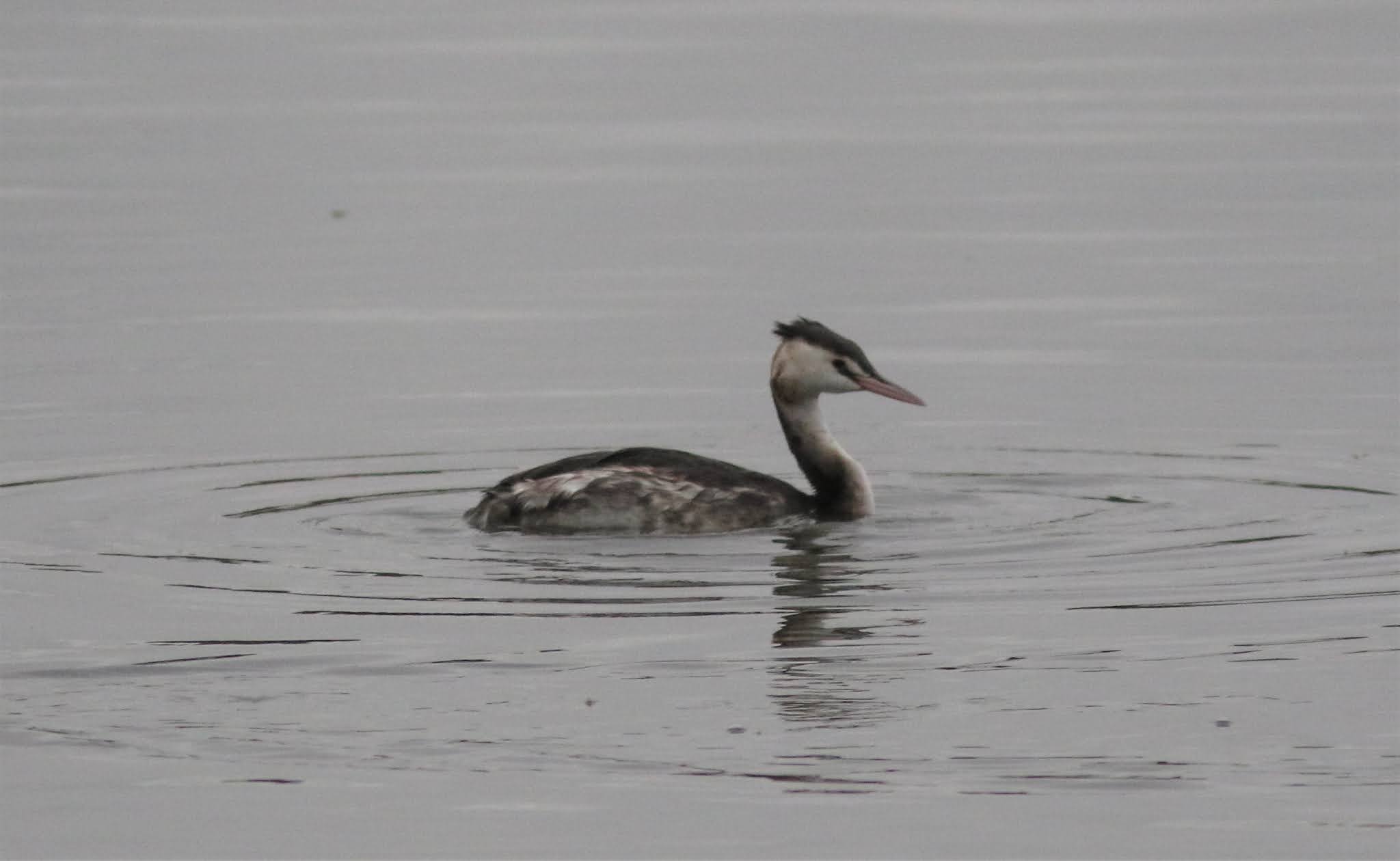
There was however an evident shift in the suite of migrants with our first Skylarks (11), Reed Bunting (5) and Chaffinches (2+6) present, an increase in Snipe numbers to 16 and up to 50 Lapwings (only 11 recently). There has also been an increase in Woodpigeon numbers (40+). A Great Crested Grebe was also a new arrival (only the second record this year) and 5 Pintail flew over (and 3 were still present on the North Lake). The Skylarks, Reed Buntings and Chaffinches mark the beginning of a shift to a late autumn suite of birds with the number of Chiffchaffs calling from the edges decreasing and the first high pitched calls of Goldcrest could be heard today. It won't be long for the first winter thrushes and the exciting late autumn mass movements. 

The juvenile Common Sandpiper is still on the wet grassland and House Martins were still moving too (50+). The guys also had a Golden Plover, Wheatear and a couple of Stonechat.

I'm staying with the family tomorrow and then next week hoping to properly start the month of rarity hunting. 


Great Crested Grebe

Friday, 2 October 2020

Beddington Farmlands- Arctic Skua

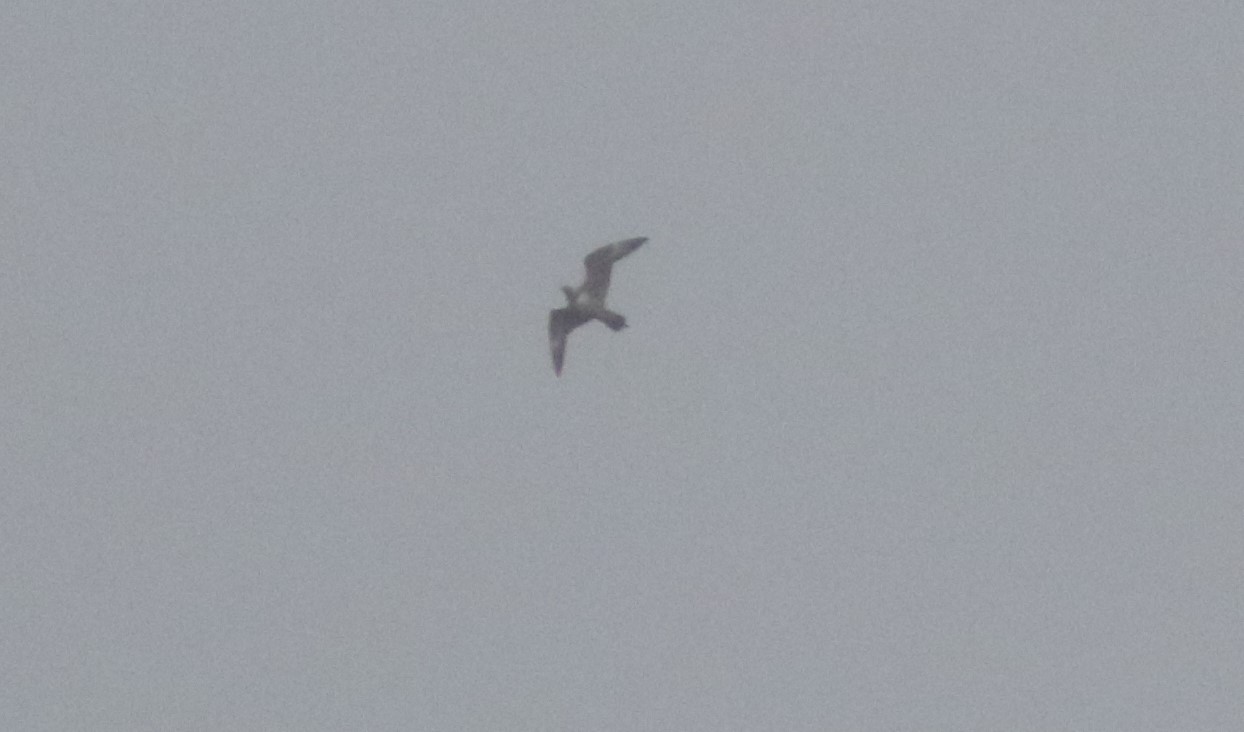
 A bloody good start to my 'Big October', I actually started one day early because the weather looked so good. Spent most of the day at the farmlands, a juvenile Arctic Skua was the first recorded on the site since 2002 and only the 9th record. Other highlights included 12 Pintail on the North Lake, 10 Wigeon, the Red-crested Pochard, Common and Green Sandpiper, 5 Snipe, 110 house martins and evening roost counts included 1200 Ring-necked Parakeet and 400 Jackdaw.  Ebird list HERE.

Intermediate juvenile Arctic Skua, the projecting central tail feathers, large flashes on the primary bases and overall structure indicate Arctic. Juvenile Pomarine would have double flashes and a blunt tail and be structurally more barrel chested and heavier structure. 
The pale breast patch and pale head are features of pale/intermediate morph juveniles (above and below) 

Typically for juvenile Arctic Skua the underwings are dark and rather plain (more barred and contrasting on Pom and Long-tailed) 
A couple of scenic shots - always a surreal sight seeing a seabird over a familiar inland patch. At one point the bird executed some classic at sea kleptoparasitic behaviour chasing a Black-headed Gull (below). 

Today's Pintail influx (above and below) 

Red-crested Pochard
Seemed to be a bit of 'bait balling' going on with a Cormorants and Egrets feeding frenzy


Thursday, 1 October 2020

ONE DAY MORE

One more day of work and then I'm off for the whole of October to try and find something rare.