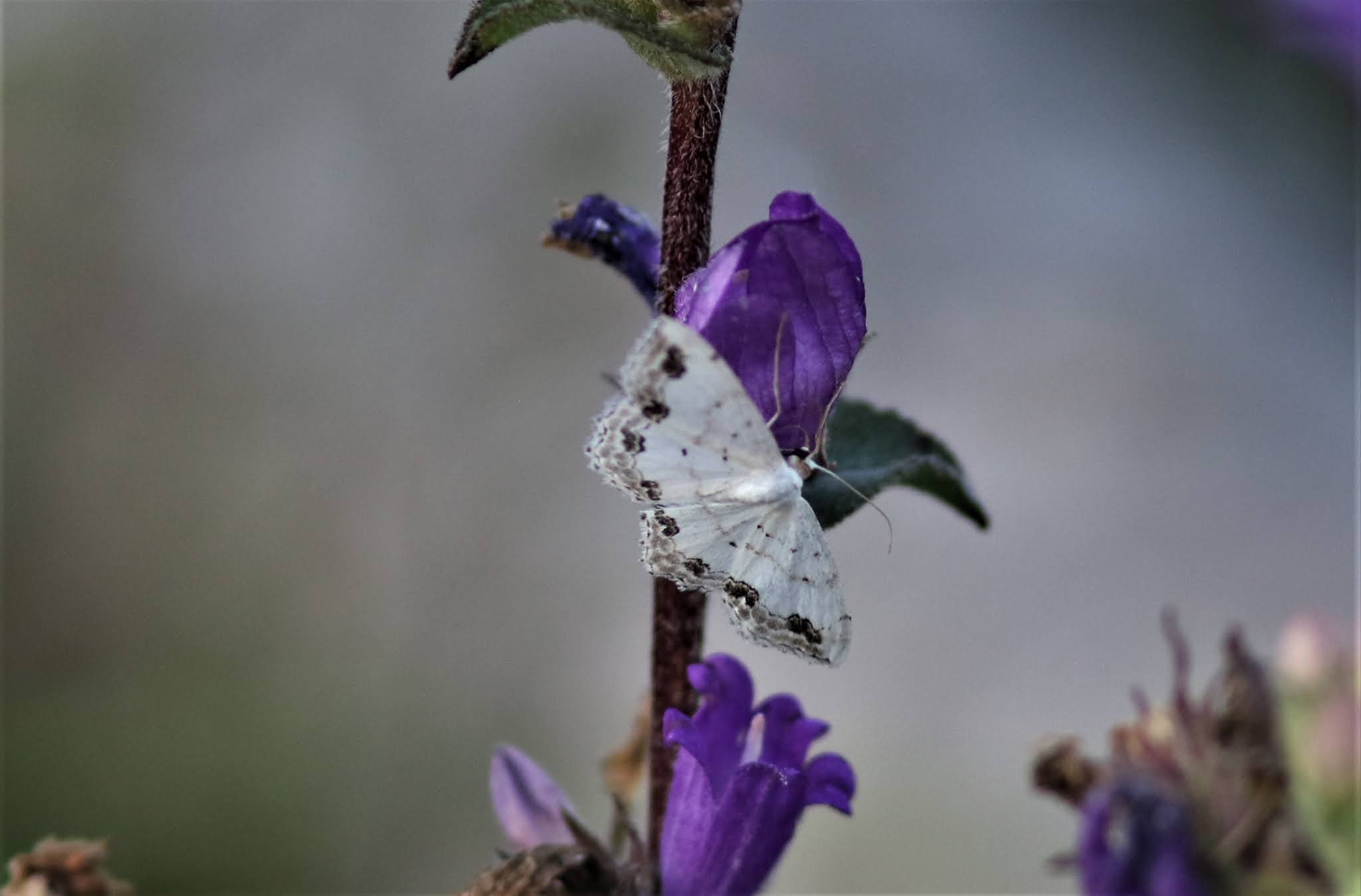
Tuesday, 10 August 2021

The Old Vicarage

Been ploughing away at the Old Vicarage on the moths and garden. Now up to 977 pan-species for the site and 465 moths, so slowly getting towards the target of 1000 and 500 respectively. 

The moth trap is now being characterised by the autumn grass moths, Lesser Broad-bordered Yellow Underwings, unidentifiable Ermines and the first Setaceous Hebrew Characters and dwindling Footmans, Bird-cherry Ermines, Hawk-moths and Uncertain/Rustics. The diversity is still not too bad with 52 species last night. 

A bit of sad news this week, Harvey the Shetland Pony died and also one of the dogs (an 18 year old Jack Russel) had a visit from the vet who decided the best thing was to put her down so we've lost two members of our domestic large mammal population, now down to six humans, one pony and three dogs. No loss in species though. Bryan mentioned we might get a pig. That will be interesting. 


Common Carpet
Red Twin-spot Carpet
Yarrow Conch 
Agriphila moths- more like selasella (above) and presumably a worn tristella (below) 

I'm checking the pale Footmans for Hoary? 
Impossible Ermines (above and below), the one above could be rorella?

Plenty of food to harvest from the mini-farm. I could literally live off this now (nice to know if ever there was an even more deadly pandemic, although we would need razor wire fencing and guard dogs to fend off the zombie neighbours! :-). Luckily we've got guns in the house as Bryan shoots clays and pheasants so anyone reading this thinking of of raiding us in the next big collapse we've thought of that too lol . Actually on a serious note in this game of insurance adaptation to the ecological and climate emergency personal security and defence is a critical consideration. 

Preservation of food is vital in self-sufficiency. Did a bit of pickle training this weekend. 
If I did actually live off the mini-farm I would probably be a lot healthier! This time of year it's easily possible to be completely self sufficient.  Keeping it up all year is the big challenge- hence the next thing to learn- preservation.  We planted some autumn potatoes this weekend too which should be ready for xmas and its possible to grow onions and garlics through the winter too, so phasing and rotating things so that there is something to harvest most of the year is also critical. 

Sunday, 8 August 2021

Otmoor Oxon tick

Decided to cash in my Oxon Cattle Egret chips today (there's been an influx in the county over the last couple of months and plenty of twitchable birds available but I've been waiting to find one or get one on a plate). There were five birds at Otmoor yesterday following many recent records of one to two birds so I went to see them today. There's going to be more roaming the county soon as a pair have successfully bred at Blenheim Park and the young will fledge soon. 

Also had the Common Crane, a couple of Bitterns, two Garganey, Marsh Harriers and a Greenshank on Big Otmoor.  


Cattle Egret (adult summer) 

All five birds were feeding around the cattle in the long grass
Eclipse male Garganeys 
Greenshank 
Bittern- looks like a fresh bird so maybe a juvenile? There's been up to three females with young this year. Otmoor really is pretty incredible with breeding Garganey, Bitterns, Cranes, Marsh Harriers and Curlews.  

Wednesday, 4 August 2021

Denbies

A busy day, overnighted at Walton last night (Little Owl again) and then did a morning of quotes in South London before meeting Zach at the farmlands for a Brown Hairstreak twitch and dip and then spent the evening at Denbies Hillside with Gillian twitching and dipping Adonis Blue.

Chalkhill Blue at Denbies, literally hundreds of these, must have been 500 on the section we covered 
Brown Argus a few of these and a single Common Blue 
Silver-spotted Skipper 
Chalk Carpet (above)- a few of these, lots of 'Treble Bars', a Clouded Buff and Lace Borders (below)  

A worn Oncocera semirubella I presume 
Pyrausta despicata
A couple of Plume moths to id (above and below)

Chalkhill Blues (males and females) 
Had this Long-legged Tabby, Synaphe punctalis at the campsite this morning- an overdue lifer . Also had Jersey Tigers and Box-tree Moths flying around gardens, noticeable absentees 70 miles to the north at the Old Vic. 

Tuesday, 3 August 2021

Day in Kent

Had a day in the Thames Estuary yesterday. Started off at high tide at Shellness, pottered around the Swale until about lunch time and then over to Oare marshes for the rising tide. Ebird lists HERE and HERE. 

Highlights included the sheer spectacle of the wader flocks set against a back drop of flowering Sea Lavender, a Great Egret at Shellness, an unseasonal Brent Goose there, Whimbrels, the adult Bonaparte's Gull at Oare (now in it's 9th year visiting the site this time of year), a hunting Barn Owl at dusk, a summer plumaged Curlew Sandpiper in Faversham Creek, butterflies feeding on the sea lavender and of course the traditional stop at Leysdown for cockney sea food. 

Moulting adult summer Bonaparte's Gull (above and below) 

Great Egret at Shellness (above and below) 

Brent Goose at Shellness
Juvenile Med Gull- haven't seen so many Meds in this part of the Thames Estuary before with at least 30 flying west over Oare in small groups. 
Whimbrel (above and below)- an evocative classic early autumn migrant 

Black-tailed Godwits- about 1700 in the Swale at the moment. The water level at Oare is high at the moment so most waders were roosting in other parts of the Swale.
Barn Owl hunting over East Flood 
Brown Argus on Sea Lavender . Also had 3 Clouded Yellows, 40+ Gatekeepers, 15+ Essex Skippers, Red Admiral, Painted Lady, Common Blue,  Peacock and Large White feeding out on the Salt marsh. Also good numbers of migrant hawkers, a possible Southern Migrant Hawker and Ruddy Darters around.  
Closest I can get is Bilberry Tortrix which is regular on Salt Marsh 
According to my PlantNet app this is Greater Sea-spurrey. Other plants out on the Salt Marsh (according to the app)  included Sea Lavender, Sea Arrowgrass, Square-stalked Willowherb, Common Glasswort, Small Cord-grass, Annual Sea-bite, Sea Purslane, Golden Samphire and also had some Common Wormwood at Oare.  
The Bonaparte's Gull on the rising tide

Sunday, 1 August 2021

Weekend round up, The Old Vic and Rectory Farm Night trip

The weather has turned wetter and cooler and the moth trap species tally at the Old Vic has dropped from 120 during the heat wave to only 39 on Friday night. However still got a lifer in the form of a Crescent and a few new for years.

Yesterday evening was spent attending a Bucks Invertebrate Group (BIG) , (website HERE) ,  moth trapping event at Rectory Farm (more HERE ) in the north of the county. It was great to meet Dave Wilton, the county moth recorder who runs the excellent Upper Thames Moth Blog Community HERE and has been an endless help in identification and validating the Old Vic records. Also great to meet BIG members Bill and Jeremy. 

I got to use my new generator for the first time and was also great to learn some in the field moth recording techniques (they look different at night under the MV lights!). Photography is a whole new challenge which I'll have to work on. Luckily the rain stopped but it was a pretty cool temperature and I ended up with 58 species in my trap after 3 hours (we ran 4 traps between us) including a few moth lifers including a couple I was unable to photograph (Eucosma conterminana and Elachista albidella). 

Thanks Bill, Dave and Jeremy for a great evening. 

Had Little and Barn Owl at Rectory Farm and back at the Old Vic on Friday had a good view of our garden Tawny Owl as it flew past the balcony. 

 The Old Vicarage 
Crescent at the Old Vic- a new one for me 
Lychnis at the Old Vic- a new for year 
Aspilapteryx tringipennella
Perhaps Nut Bud Moth  Epinotia tenerana .Nope this is a Holly Tortix (thanks Dave)- also recorded today below. 
Elachista (maybe canapennella) ? Thanks Dave for suggestions 
Common Frog in the garden yesterday
We could be self sufficient from the mini-farm now with plenty of potatoes, runner, baby beets, cucumbers and courgettes

Rectory Farm 

Great to finally use the generator 
Rectory Farm. Farmer George Eaton manages a productive commercial farm with a good range of biodiversity features  
Holly Tortrix- note the fold in the wing which is a good id pointer 
Pale Bordered Piercer, Grapholita janthinana
Willow Ermine, Yponomeuta rorrella- The distinctive white wedge at the distal end of the  costa, dark crescent at the apex and dusky wedge in mid wing are distinctive. 
Brown Plume , Stenoptilia pterodactyla (As I say, need to work on my night moth photography!)