Tuesday, 21 April 2015

STONE CURLEW

 Stone-curlew at Beddington this evening found by Glenn Jones. The first site record since 1982. This is the seventh record for the farmlands following records in 1955, 1957, 1971 (2 records), 1979 and 1982.
 Only possible identification issue (a remote one) is of an escaped Burhinus. The white and black wing bars bordering the mid-wing panel is diagnostic of Stone-curlew (Senegal Thick-knee has a dark wing bar on the lesser/median coverts and Water Dikkop has a white bar there but it does not have a black lower border- the feet also project beyond the tail in flight in Water Dikkop).Worldwide in the Thick-knee family there are (according to HBW) two genera, nine species and 19 taxa. There are six races of Stone-curlew and based on location (and showing the typical rich sandy brown colouration) this is most probably B.o. oedicneumus.  
 Flying over the Beddington village houses
  Mobbed by a crow between the wires
 Canons Farm birders (the nearest patch) make it before it gets dark. Unfortunately not all the locals got it- hope it's still there tomorrow. 
  Dave 'Swift'- the second twitch in as many weeks thanks to his new heart- which luckily held out in all the excitement
Glenn Jones- finder. Cheers Glenn!

Out of the Blue

 Roger picked these three beauties up right up in the blue- adult summer Little Gulls
 Little Gulls
 Good numbers of Common Buzzard again (this looks like a young bird- diffuse trailing edge to wing)
 Red Kite- this is shaping up to be the best Red Kite year ever at the farmlands - almost daily now
 The gulls reacting to the Raptors
 An alderfly 
 ?
Lunch at the Bedzed Wildlife Garden for a bit of tidying up and also put some new wildflower seed in to the spaces along the borders

Praying Mantis World


A couple of videos from my nephew Dylan whose having a wild childhood in the Balkans. Great to see the youngsters inspiring each other and forming these on line friendship groups around nature experiences- on their own. Brilliant.

Dylan's blog here:
PRAYING MANTIS WORLD

And more from what the family are up to out there here : BALKAN ECOLOGY PROJECT


Monday, 20 April 2015

Common Tern

Longish bill, neck and head, central (in body) wings and full structure- all good for Common Tern
The dark trailing edge looks well defined but this could be due to photo effect- it should be rather diffuse in Common Tern (Arctic normally shows the well defined trailing edge). Translucency seems to be confined to the inner primaries which is a pro-Common Tern feature. 
In this pose the bird looks short-billed with short neck and head and also looks like it has grey underparts with white cheeks. From this angle it also looks like the wings are off centre and appears long-tailed. All those features are pro-Arctic. It aint easy. Important to get a photo of the bird square on. The harsh light doesn't provide a neutral lighting to judge tone and a lot of a tones are probably shade. 
This don't help either. 

It's that tit-spanner time of year again- Common and Arctic Terns on the move. Every year we get single birds/small groups passing through the farmlands, often quickly and at distance and we usually deal with the identification with a combination of careful methodical analysis and judgement (mild stringing). Best way to attempt an identification I reckon is to try and get photos but birds can change apparent  structure, size, tone, patterns and even colour depending on angle and light and also the camera often makes a degree of image capture interpretation and also doesn't always capture the fine detail you need unless the bird is close and photogenic. I reckon on balance this one is Common Tern.  

A few other bits moving today too- about 20+ Swallow, a few Buzzard, a Red Kite, a couple of new Great Black-backed gull, a few Blackheads moving, a Reed Warbler has arrived and 'my' Whitethroat has arrived to the obs garden. 

Incinerator Update

Local Councillor Suspended from The Party by speaking out about Beddington Farmlands Incinerator:
Click HERE
and Sutton Guardian

The matter goes to the Court of Appeal next week
Previous judgement: HERE

Sunday, 19 April 2015

Odd Song


Dodgy recording of a dodgy Blackcap- sounding like a Reed Warbler. At the farmlands a couple of days ago.

Saturday, 18 April 2015

Watching flies- missed a Marsh Harrier

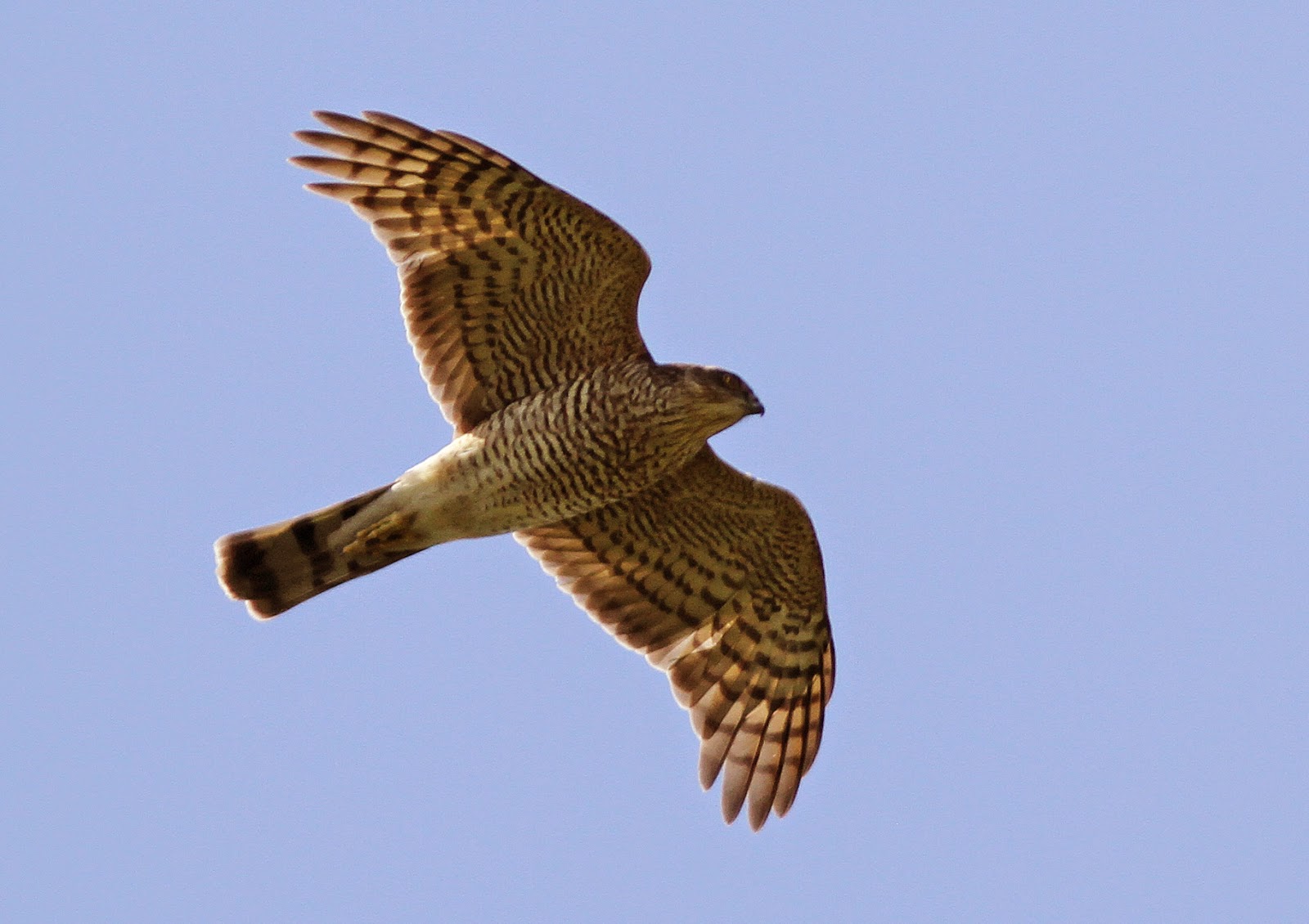
 Female Sparrowhawk- the irregular barring on the underparts and streaked cheeks  suggests this is a young bird- 2nd calender year. The moulting of the inner primaries seems quite early- usually starts in May and June. The size, strucutre and early moult support sexing as female (males moult later)
 Green-veined White. The first of the year in the week. Also the first Orange-tips this week.
 Eristalis sp? 
 Episyrphus balteatus (The Marmalade Fly)- Britain's commonest hover.
 Works have commenced on the new entrance to the farmlands
The daffs have come ok on the Hackbridge verges (part of the green corridor improvements adjacent to the reserve), Before pic HERE

Bit cool and windy today so I headed to the north lake path to look for insects. They concentrate there when windy because it sheltered by the taller trees. Problem is the trees keep the wind and view of the sky out so its a bit of a tunnel in there- which is why I missed the Marsh Harrier flying the other side of the trees. Not the first time birds have been missed by not 'looking up' BEETLEJUICE DIPPING