Wednesday, 18 January 2023

Malta, Day Two, Maltese Sparrows

I had a free morning so did some more exploring.  I first visited the world famous Hagar Qim and Mnajdra Neolithic temple sites, two of the numerous temples on the island which date back to 5000 BC (Check out the Netflix series Ancient Apocalypse for some dodgy but entertaining pseudoscience that features these temples)  

I got a bit distracted from the archaeology as the temple ruins hosted breeding colonies of 'Maltese Sparrows'. The jury is still out on 'Maltese Sparrows', Ebird classifies them as Spanish Sparrows as does various local ornithological texts, but Birds of the World (also Cornell/Ebird) suggests that Italian Sparrows are also present on Malta and one of the most recent reviews into the matter by Massa et al (here) concluded that there is a cline-like situation between Italian and Spanish Sparrows which form a large hybrid zone from Southern Italy to Malta- with birds becoming progressively Spanish Sparrow like as you go south. Italian Sparrow itself could be an ancient hybrid (between House and Spanish Sparrow) although Massa et al suggests there is some evidence that Italian Sparrow originated as a distinct species from North Africa and expanded North (and has since become extinct from North Africa).  

So it's a bit messy and if I understand correctly we could have Italian and Spanish Sparrows here which certainly hybridise or otherwise the whole lot are just a big hybrid swarm with no pure Italian or Spanish sparrows remaining or pure birds were never here and colonising birds were from hybrid populations. Considering Malta forms the boundary between Spanish Sparrows in North Africa where Italian Sparrows are not present it seems to make sense that the hybrid wave moved through Malta first so indeed there could have been both pure Italian and Spanish Sparrows here at one point and there still might be. 

Anyway here's a few of them that were at the Temples- presumably these sparrows have also been here for the 5000 years the temples have. This isn't the best time of year to look at these sparrows as most of the research done on them is during the breeding season in summer plumage but most of the males were already in summer plumage and were seemingly holding territory (singing and visiting nest sites). Only males distinguishable as the females of House, Spanish and Italian are largely inseparable. 

Just heard from Nicholas Galea that 'pure' Spanish Sparrows do occur in Malta on migration in March and October which adds another fascinating layer to this situation.  

Update 190123- see comment below for an even bigger twist to the plot. Pre-print on paper referred to in comment here. According to this work the Maltese Sparrows are indeed a population of Italian Sparrows and are cited as being an example of where hybridisation is a pervasive evolutionary force that generates new species. If I understand the paper correctly Italian Sparrows are indeed an ancient hybrid of House and Spanish Sparrow (formed when House Sparrows colonised the Mediterranean) and in Malta they just have a bit more Spanish Sparrow genes in them but are still a 'stable species unit' aligned with other populations of Italian Sparrows. 

A rather Spanish looking 'Maltese Sparrow' (above and below). Considering the time of year presumably these already dense markings will intensify further. 

A bird coming out of winter plumage with grey tips to crown and reduced black markings on breast. This is why it's not the best time of year to look at these birds as reduced black markings on the upperparts are a feature of Italian Sparrows and also winter plumaged Spanish Sparrows. However the grey head markings are perhaps a good indication of the extent of the winter ware to summer plumage.  
Another Spanish looking Maltese
A rather Italian looking Maltese Sparrow with black mainly confined to the bib with reduced black on the underparts- reduced here to relatively light streaking. The lack of grey markings on the crown could indicate this birds is already approaching summer plumage.
A rather Spanish looking one
A very Spanish looking one with very dense underpart markings
Still transitioning into summer plumage but this is very Italian looking (but that fine underpart streaking could well intensify as summer plumage develops more)
The puffed up underpart feathers make this look even more Italian like
Also feeding on the temple ruins were Black Redstart (above) and Robin (below)

The sound of Zitting Cisticolas is ubiquitous across the island but they are not that easy to see or photograph on the deck
Mnajdra Temple- the sparrows were getting in between the blocks
I did a bit of exploring around the surrounding garigue. There were a couple of Blue Rock Thrush. Mnajdra Temple is in the background under the weathering protection dome. 
After visiting the temples I did a quick bit of exploring along the amazing coastline of this area towards Dingli Cliffs. Absolutely stunning landscape (above and below). The gentle sloping green areas are the clay areas which are fertile and are farmed in terraces. Must be a migrant mecca at the right times of year. 

Tuesday, 17 January 2023

Malta, Day One

I'm in Malta at the moment on a 'business' trip. This was supposed to be part of our five year investment plan to save up a million quid to buy a private nature reserve/small holding but since the sad passing of Holly's dad this xmas we will probably have to move out of our 'commune' (The Old Vic) because of affordability reasons so I actually don't know what the hell is going on (until after probate). Anyway the wheels are already in motion over here and we are building a new flat on top of a flat that we already own in partnership with a neighbour and local developer in order to double our equity and have a new rental income stream. 

So my first work meeting is tomorrow so I had a free day today. Malta is an island of two halves- an eastern over-developed, mass tourism, cruise ship, over-crowded and congested real life matrix-like hell half and a western Mediterranean hidden natural gem half.  I did a bit of orientation today and visited areas I've never been to before  (I've been to Malta many times as my Mum is from here but this is the first time on my own to do as I please). I started off in the north of the island over looking Comino and Gozo, popped into Ghadira nature reserve quickly and then spent a bit of time at Malta's main national park , Majjistral, mainly an area of Mediterranean Garigue (pronounced gari-goo) habitat. I then explored the escarpments around the Victoria lines before heading back south to my base in Marsascala and spent the late afternoon at Delimara. No point in sharing the Ebird lists as there really aren't that many birds in Malta this time of year but today's highlights included a couple of Greater Flamingos at Ghadira, a Great Cormorant off the Delimara, a few Blue Rock Thrushes, Black Reds, Sardinian Warblers and Zitting Cisticolas.   

There are no endemic birds on Malta but there are several endemic plants (including endemic Pyramidal and Spider Orchids) and there is also Maltese Wall Lizard and this is the only place in Europe to see Algerian Whipsnake. There are also good numbers of Mediterranean Chameleons and other decent herps like Western Whipsnake (Black morphs), Cat Snake and Leopard Snake and even a few Terrapin exotics and Painted Frogs. However I'm here at the wrong time of year to see any of that.      

Black Redstart
Blue Rock Thrush- the national bird of Malta but I always find them shy (probably due to the famous Maltese bird hunting pressure). They were singing today at the Victoria lines escarpment
I remember reading something about the Maltese 'Spanish Sparrows' and 'Italian Sparrow look-alikes'. I'll have a closer look over the next few days. This one looks like one of the dodgy ones. Update 180123 - found this on the subject Here
View over Comino and Gozo islands
View over Ghadira nature reserve. Despite all the bad press that Malta gets from the hunting culture it actually has about 13% of the island designated as Natura 2000 sites (in pretty good shape too) and over 30% of Maltese waters is Marine protected areas. Ecologically its in a lot better shape than some nature depleted, judgemental and hypocritical deluded  European islands like Britain.  
Maltese geology in one shot- (from top to bottom) the Upper Corraline limestone (7-5 mya) , Greensand, Blue Clay (the steppe like habitat gently sloping area) and the basal limestones (Globigerina and Lower Corralline, 28-23 mya) under that.
View from the Victoria Lines escarpment over Mjarr. This must be an excellent vis mig spot during migration times. 
Couldn't help seeing some of the tourist spots on my travels- Popeye Village (the set from the movie- they make a lot of films in Malta).

Friday, 13 January 2023

50 Years of Non-stop Birding, 1972 to 1985

I meant to do my mid-century obituary-while-not-dead-yet last year when I turned 50 in September but I wasn't bored enough. However now we are in the depths of winter and as cabin fever bites hard it's time for more drivel on this blog. So here's the first part of my life story, one of the 8000 million insignificant human stories now playing out on this tiny lost planet floating around the eternal universe.

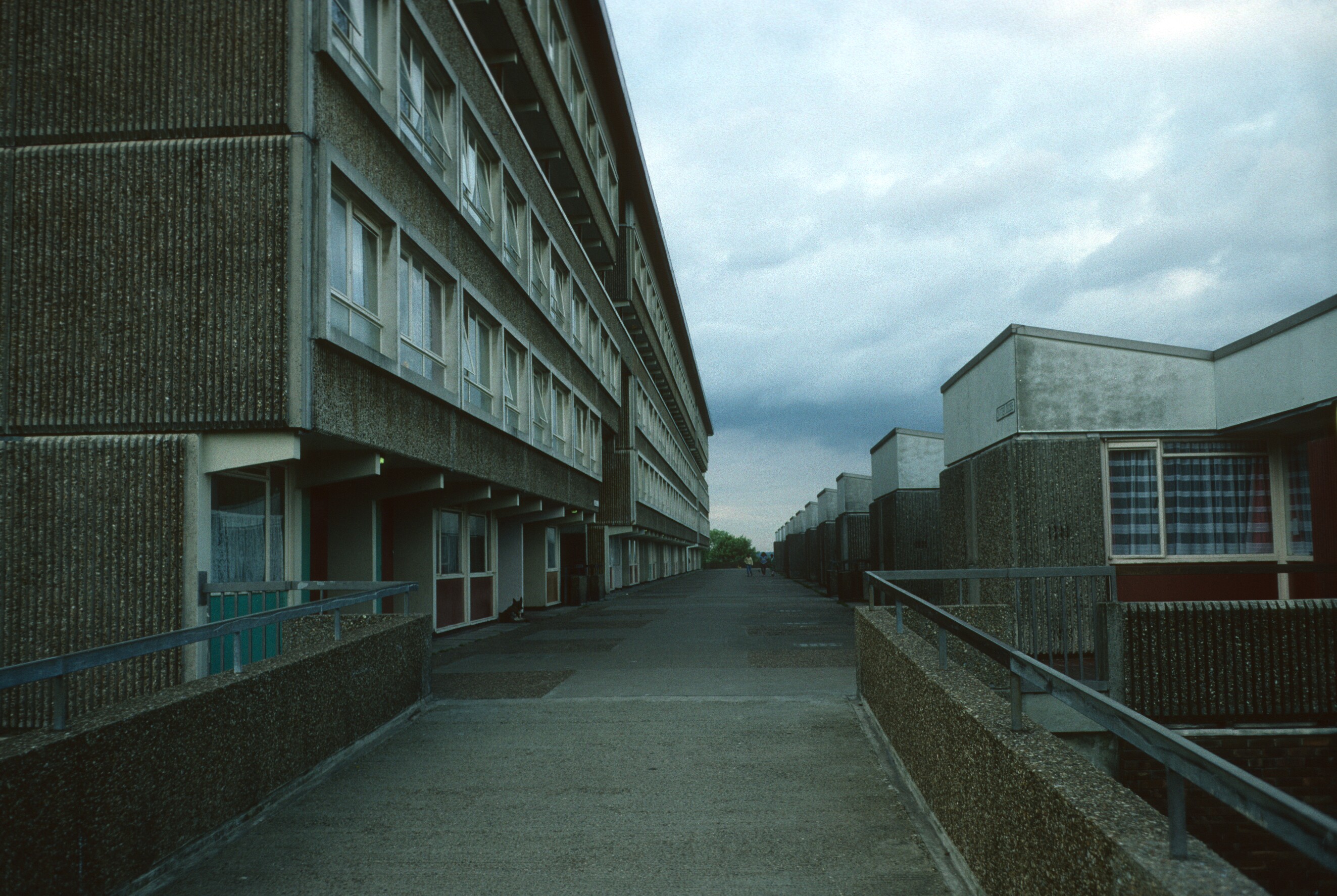
So there are few places worst in the universe to be born into than a South London council estate in the 1970s. Roundshaw Council Estate was so bad that they literally blew the whole thing up and started again. Here's my mate Wayne's flat getting blown up. 


Roundshaw was a brutalist style socialist project of the 1970s inspired from the Communist tenement blocks of Eastern Europe. My mum was a 'societal refugee' from Malta  (her fiance died when he was 17 so she was on the scrap heap by not being married by 16) and my dad was a postman (who pulled my mum in the Cats Whiskers night club in Streatham with pick up lines she couldn't understand because she couldn't speak a word of English). They didn't particularly  fall in love but were equally hopeless and being driven by cultural pressures they got married. By the time my mum understood what my dad was saying and realised what a penniless cockney wide boy he was it was all too late. Like a lot of people in poverty they thought it was a good idea to bring six children into the hell they were in and ended up in council housing and on benefits.   

I was born with the umbilical chord wrapped around my neck, seemingly trying to hang myself before it all started but I didn't succeed. My childhood was on a slab of concrete (called a deck). The commie idea behind the deck was the shared space at the front of the flats where all the kids could play. As it was a 'floating' slab of concrete there were no cars to worry about. 

The deck, where I grew up. 

This was such a natureless hell that I don't even remember seeing a Feral Pigeon or House Sparrow there. 

Anyway at age seven (1978) Margaret Thatcher had started her mission to rid the UK of socialists and commies so she encouraged 'council scum' to buy their own homes. On a below minimum wage my parents were able to get a mortgage and buy a 4 bedroom house (eight of us plus my nan later had to share rooms). Granted the house we bought was next to a sewage farm and we were one of the few people in Hackbridge (the crack) that had 'moved up in the world' to get there- most others there had fallen from grace. 

As the only money we had went to pay off the mortgage, we couldn't keep up with the 'flash jacks' (now called Chavs i.e. poor people who spend all their money on consumer shite) so in the late 1970s and early 1980s we couldn't afford the ZX Spectrum, Acorn BBC, Commodore 64 computers , video recorder or even a colour TV. They couldn't even afford to dress me in Farahs and a Y-jumper so I had to go round dressed up in a Jamaican boys clothes (complete with tropical patterned pants and vest) who my mum knew from her church and was two years older than me and was growing out of his clothes. I was basically perpetually bored (despite the oversized dazzling underwear) so we had to be creative to pass the time- which usually meant fighting and torturing my siblings. 

Just before we escaped Roundshaw Council Estate, Fundamental Christian Evangelists from the southern states of North America had launched a 'mission' on the estate to 'save souls'. They were from a cult called the Church of Christ (which featured on the TV a lot during the 1970s for brainwashing). Anyway, they brought the 'good news' to my mum and dad, basically convincing them that they were actually global elites instead of 'council scum', and were chosen by God to build a spiritual empire on Earth (for a small weekly donation and signing up to be a member- a numbers game to keep the preachers funding coming in as part of US Jesus Imperialism). 

So by the time we got to Hackbridge I had two choices, either stay around the entertainment free house with all the bible bashing, hymn singing, american evangelists and cult members or bugger off over the nearby sewage farm with my mates to throw stones at the gypsy horses penises when they got erections. So I chose the latter and we also split our time between trying to hit the balls eye (literally) and stoning the ducks in Beddington Park. We also did a bit of arson (setting fire to Mitcham Common and Beddington Farmlands) and mild vandalism (although my mate Tim went to prison eventually as things used to get out of hand when we went out with him). When at home I used to pass the time by pulling the legs off spiders (I even wrote a song about that here). So I was slowly 'connecting with nature'. Meanwhile my brother used to sell soft drugs and pirated porn at the front door during prayer meetings when my parents were occupied talking to Jesus.  

Anyway it was on one of our Horse ball-eyes missions with Wayne and Chris to the sewage farm that I saw something stranger than anything I'd seen before (and I had seen a lot of weird shit). There was a bloke looking through a telescope over the sludge beds. I asked him what he was doing and he said he was looking for a Lesser Yellowlegs. This was in 1984. I remember thinking WTF is a Lesser @@ing Yellowlegs. Just then the Thames Water van started driving towards us so we had to leg it (as we were trespassing as it was permit only). As we legged it off we did the standard thing and shouted insults at the telescope bloke. 

Shortly after, an ex- Devil worshipper in my parents cult (he'd been converted!) gave me a bird book and a poster of garden birds. I put the poster up on my wall and read the book because I didn't have any other books (apart from the Bible) or any other posters that my mum's religion would permit me to put up. Meanwhile at school we started doing nature studies too. Then my parents bought a caravan in Bognor Regis and we started going to the coast on weekends and visiting Arundel (the free bit outside the WWT reserve). We also visited my mum's island of Malta and I met my cousins and uncles who were bird hunters and had stuffed bird collections which I found fascinating. 

Now on family weekends to Bognor and in between soft vandalism with my mates in the local green spaces (we also built camps along the River Wandle) I started noticing birds from the ex-Devil worshipper's bird book and poster. I started ticking them off in my book and so I went back to the sewage farm on a new mission and started asking more questions to the strange bloke with the telescope, Garry Messenbird, who started showing me what he was looking at through his telescope. I was electrified and soon became obsessed. In 1985 I started my first birding notebook here. So it began.  


Tuesday, 10 January 2023

Bulgaria Project Winter Work Update

I sometimes hate the winter.  It's a good time to catch up with data entry and report writing etc but I do miss the daily excitement of not knowing what you're going to see today. There tends to be little mystery in the winter, the answer is, for birds, usually exactly the same thing that arrived in November (unless there is a bit of hard weather) and for moths its about one of a small handful of species that fly this time of year. I promised myself years ago to migrate south with the birds to the tropics in the winter and I started doing that but since the boys have arrived it's not so easy.  

Anyway, seasonal affective disorder aside  I have been getting through various bits like the Azores rare bird reports, processing rarity submissions with the PRC,  Ebird data entry and also trying to get more names on the moth species from the Bulgaria project. Now on 100 species of moths and butterfly for the site HERE. The Ebird list is now on 140 HERE. 

The I-Naturalist Bulgaria project HERE

Luckily I get to escape for a bit next week as I have to go to Malta on a business trip. Considering what's happened at the Old Vic with the passing away of Bryan, the Malta project (and all the other investments we started in order to save up for farm/nature project) could now be an inconvenience (aka burden) as we will probably have to move out the Old Vic much sooner. So as usual, I make plans and the universe wipes its arse with them and sends me off somewhere else. One of the main advantages about drifting around this planet for 50 years is, thanks to experience, it comes as little shock as you watch your latest hopes and dreams flushing down the pan. Anyway I trust 'The Process' rather than my own tiny brain to make the best decisions so all good and quite exciting really to wonder where we are going to get washed up next. 

Monday, 9 January 2023

Capitalist Realism

I was reading some stuff on Capitalist Realism today. I guess 50 years old must be a standard epiphany moment for many people who have experimented with alternative systems and socio-environmentalism. You get to 50 and nothing you do is working out the way you hoped; it kind of means its never going to work. I guess for me my main loss of faith is mainly due to just far too many 'betrayals' and lack of support but perhaps more so the realisation that keeping up high energy commitments which add or maintain natural and social capital over long periods of time just cannot compete with value extraction systems and it has nothing to do with 'educating' people or lack of choice (more or less everyone in the Beddington Farmlands project choose supporting value extraction and they were all highly informed of all the details).  It simply requires too much effort to avert value extraction so we are faced with a very frightening realism- capitalist systems will push us all to the brink of extinction and before anything fundamentally changes, we will have to nearly 'touch the sun' first. At some point the energy inputs to attempting to extract value will be higher than the energy inputs to regeneration e.g. if farmland is depleted so much that crops become increasingly more difficult and expensive to grow, it becomes cheaper and easier to use regenerative methods. There are plenty of examples were i.e. fish stocks have become depleted and local industry collapses which has led to quotas and sustainable fishing systems being introduced. 

So this is Capitalist Realism- value extraction, environmental decline and transfer of wealth into smaller and smaller group of elites (those who take the loot from destroying the planet facilitated by everyone who engages in the systems they govern)  is inevitable, disaster is inevitable and if there is any chance of recovery, disaster must come before recovery. 

Indeed there will always be examples that buck the trend of e.g. well managed nature reserves and parallel structures but these exceptions to the rules simply prove the rules and are also held together very weakly by trade offs and compromises (e.g. the way that the RSPB and Wildlife Trusts are mainly funded by blood money i.e. money earnt from the main Capitalist system e.g. Viridor funding these NGOs).  These exceptions are valuable in that they may well inspire recovery after disaster models but ultimately they are more likely to be out competed if ever main stream systems adopted some of their principles (like we have seen with natural capital companies like Foresight, L'Oreal funded Rewilding Estates and millionaire led nature conservation like Knepp etc suddenly exploding onto the scene challenging the NGO model as the ecological emergency intensifies and the first signs of mainstream change hoves into view) .  

In short, things have to get worse before they get better. However that short sentence means immense suffering and immense loss at global scale, possibly, probably, inevitably the greatest period of human suffering in all our history as we push our planetary life support systems to breaking point. At that breaking point there will be (if we project current population growth trajectories) maximum numbers of us living (fighting) to survive. The cracks are already appearing, the writing is on the wall and very few people are treating this emergency like an emergency. I'm not talking about a teenager fantasy held by the likes of Greta Thunberg appealing to those elites to stop this disaster (of course they fucking won't- they are engineers and designers of it, they are loving it all coming together as planned) but I'm talking about cretins like you and me. We can all see it coming but very few people are actually preparing adequately for it. Indeed plenty of people are using the threat of the emergency to gain political power or followings by sowing the seeds of false hope  i.e. capitalising on the threat as their way of surviving it. However if that's not your thing but surviving is then a bit of realism is helpful. 

Capitalist systems will push us all to the brink of extinction and there is nothing that can stop that. Hope is for fools.  That is Capitalist Realism. You are fucked, your kids future is fucked, nature is fucked, everyone is fucked (including the looters eventually and they know that which is why they are trying to stay on top of the collapsing pile, have multiple homes around the world with panic rooms and bunkers and private security forces and hoard as much as possible to last as long as possible) and very soon  we will all be fighting to the death (literally and metaphorically). Here’s the World Economic Forum saying that with a bit more class Here  


There is very little anyone can do about the situation but there is a lot that anyone can do to increase their chances of survival and helping to drive the evolution of the new sustainable systems. The only hope is in the hopelessness of Capitalism . 

Here's a little ditty from Thee Bryans about Capitalist Realism: The bubble will burst

Thursday, 5 January 2023

End of an era at the Old Vic

Sadly Holly's dad, Bryan, passed away unexpectedly over the xmas holiday so it looks like 2023 is going to be the start of a new chapter for us all. Bryan was the greatest of men, an ex-BBC sound engineer and worked on some great projects including being part of the team behind the Top of the Pops dancing girlband Pans People and did work with Monty Python (it is even rumoured the Life of Brian film title was inspired by his name), he created a beautiful place for his family here, ran the whole thing calmly and decisively, was appropriately stubborn (he earnt it), he taught me all about growing food and looking after animals and lived the most active of lives (he was out on the pheasant shoot a week before his sudden departure) and was the best grandad to Jacob and Isaac. He will be greatly missed and we all are a bit lost without him at the moment, particularly as he used to do the electrics for the animal fencing and now the Pony and the Cockerel are running wild around the garden. 

The great escape (above and below)

Wednesday, 4 January 2023

Latest Portuguese Rarities Committee Report


Thanks to Pedro and Matthias we've recently published the next SPEA report HERE.